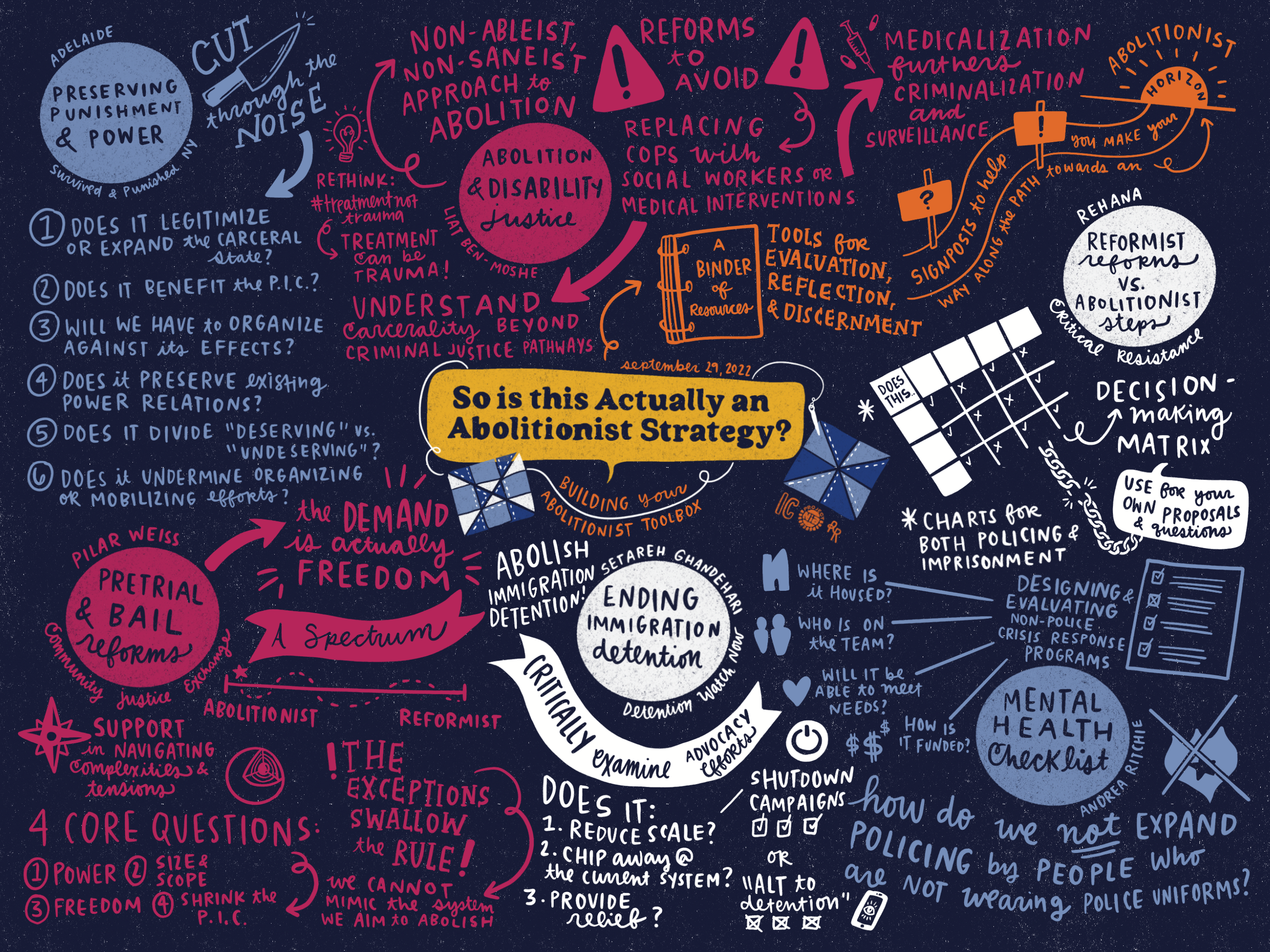
Workshop: So is this Actually an Abolitionist Proposal or Strategy?
Join Interrupting Criminalization co-founders Mariame Kaba, Andrea J. Ritchie, and guests as we explore our latest resource So is this Actually an Abolitionist Proposal or Strategy?, a collection of resources to aid in evaluation and reflection compiled by Interrupting Criminalization, Project Nia & Critical Resistance.

Don’t Be A Copagandist
A Resource for Media on Covering “Crime” and Violence, including things to avoid, approaches for advancing abolitionist narratives, and additional reading and guides.

No More Police: A Case for Abolition
In this powerful call to action, New York Times bestselling author Mariame Kaba and attorney and organizer Andrea J. Ritchie detail why policing doesn’t stop violence, instead perpetuating widespread harm; outline the many failures of contemporary police reforms; and explore demands to defund police, divest from policing, and invest in community resources to create greater safety through a Black feminist lens.


So is this Actually an Abolitionist Proposal or Strategy?
A collection of resources to aid in evaluation and reflection compiled by Interrupting Criminalization, Project Nia & Critical Resistance.

We Must Fight In Solidarity With Trans Youth
This brief is intended to help organizers working to stop the violence of surveillance, policing, and punishment and advance racial, reproductive, gender, LGBTQ, migrant, and disability justice.
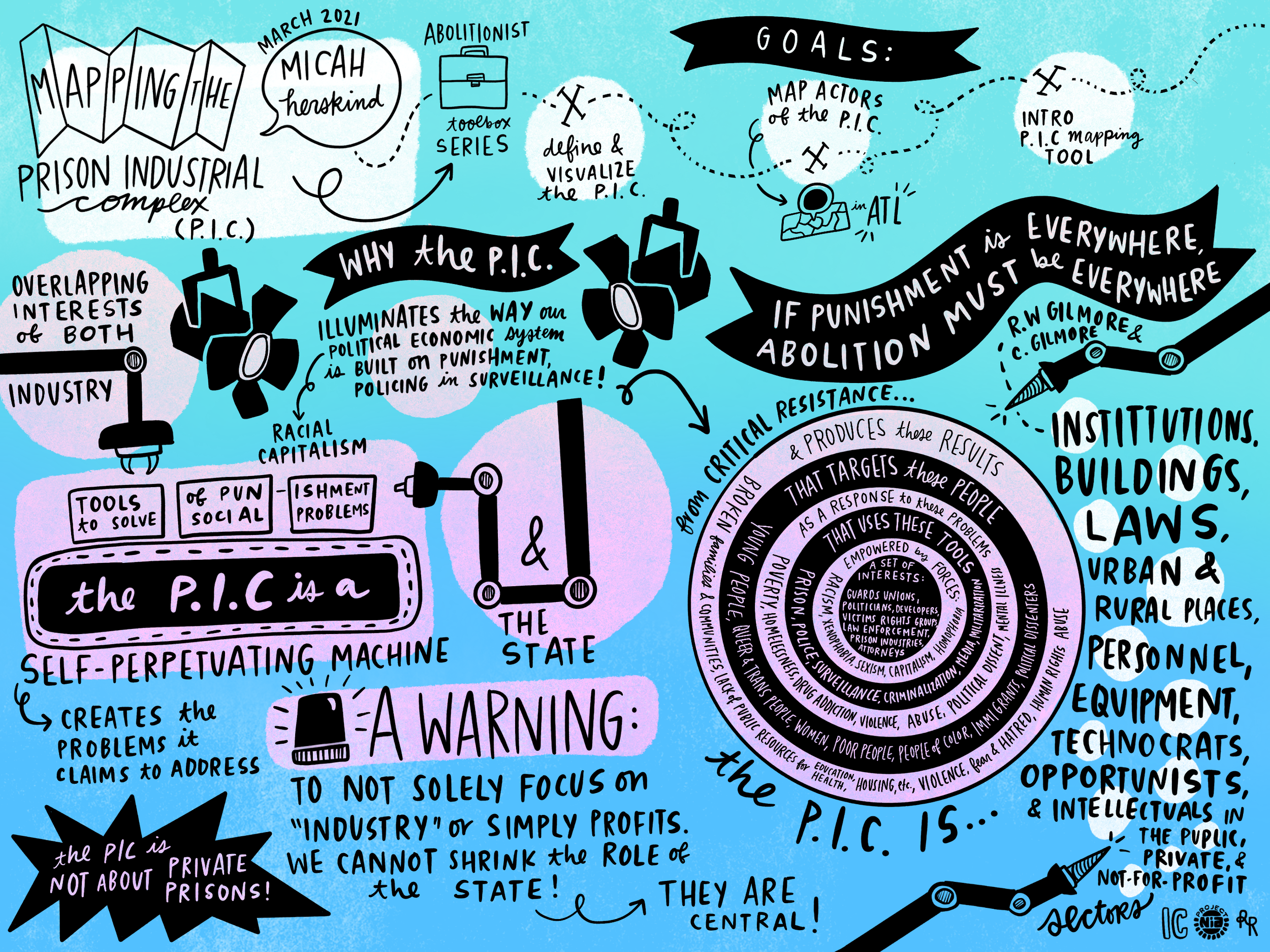
Workshop: Mapping the Prison Industrial Complex
This workshop will use a recent example of the PIC in Atlanta—whose actors promoted the construction of a massive police training facility despite overwhelming public opposition—to begin mapping the web of interests that make up the local PIC. Looking at the police, government actors and elected officials, corporations and developers, media, nonprofits, and others, we’ll draw connections between the many entities that perpetuate, expand, and rely upon the punishment system. We’ll ask what each of these actors’ stake in the punishment system is, and highlight the resistance from #StopCopCity organizers who are still working to stop the construction. Attendees will leave with a tool to aid in mapping the PIC in their locality.
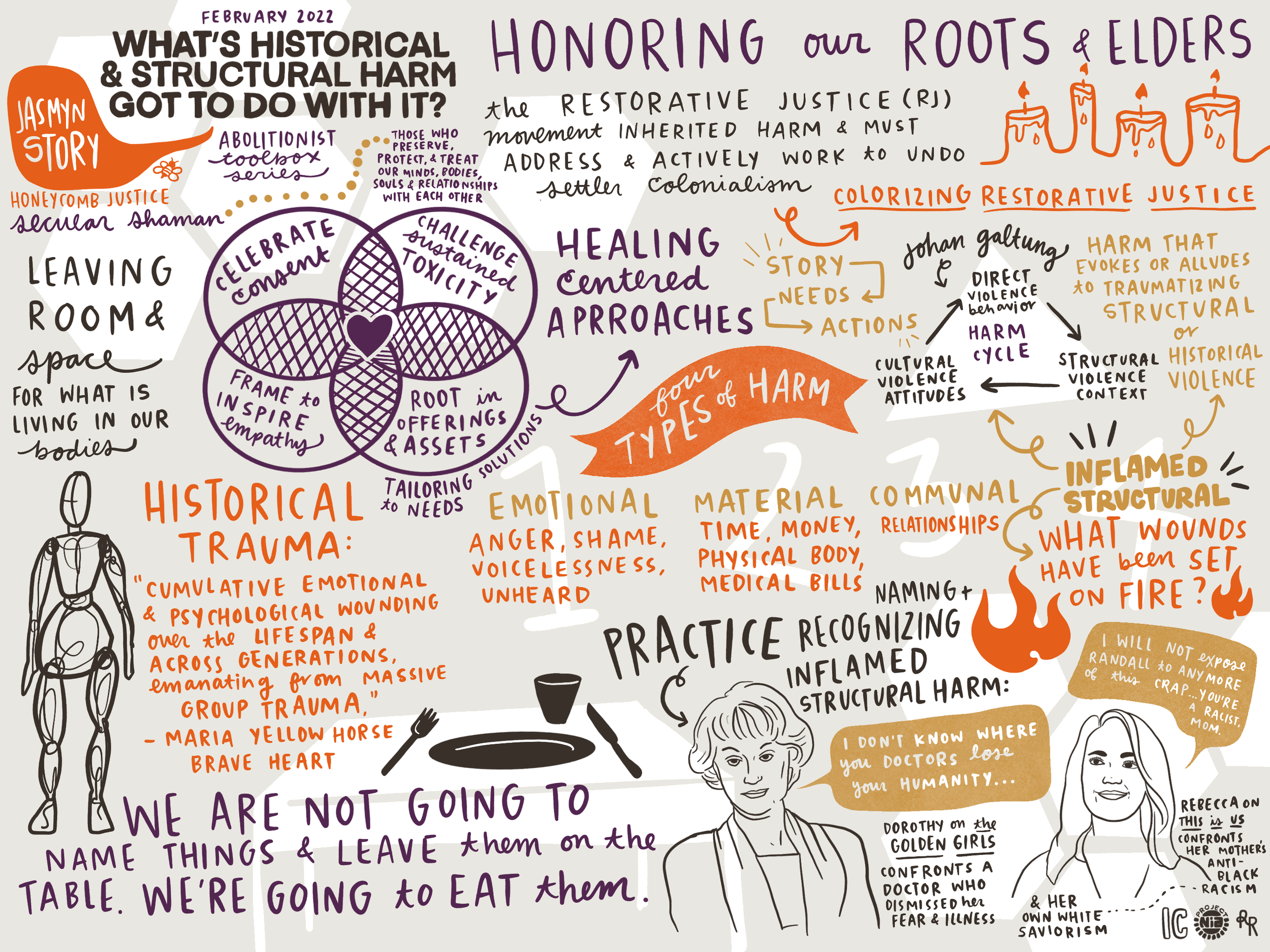
Workshop: What’s Structural Harm Got To Do With It?
This session is about understanding harm from all aspects of our being. In our journey to witness, support, acknowledge, and heal, we can expand our understanding of moments of conflict, violence, or discord if we leave room for exploring the role structural and historical violence played in both the intent and the impact. We will discuss how structural and historical harm interplay with intergenerational and life span trauma. This trauma is deserving of support and witnessing in our processes.

Police Abolition 101
Police Abolition 101 is a collaborative zine based on material by MPD 150 and on a report titled "What's Next?" edited by Interrupting Criminalization and Project NIA.

In It Together
This toolkit provides a step-by-step diagnostic tool to assess conflict in movement-building organizations and groups and provides strategies, tools, and resources to transform that conflict.

Abortion Decriminalization is Part of the Larger Struggle Against Policing and Criminalization
This brief offers an analysis of how our movements are connected, and how to push back against a widening web of criminalization.
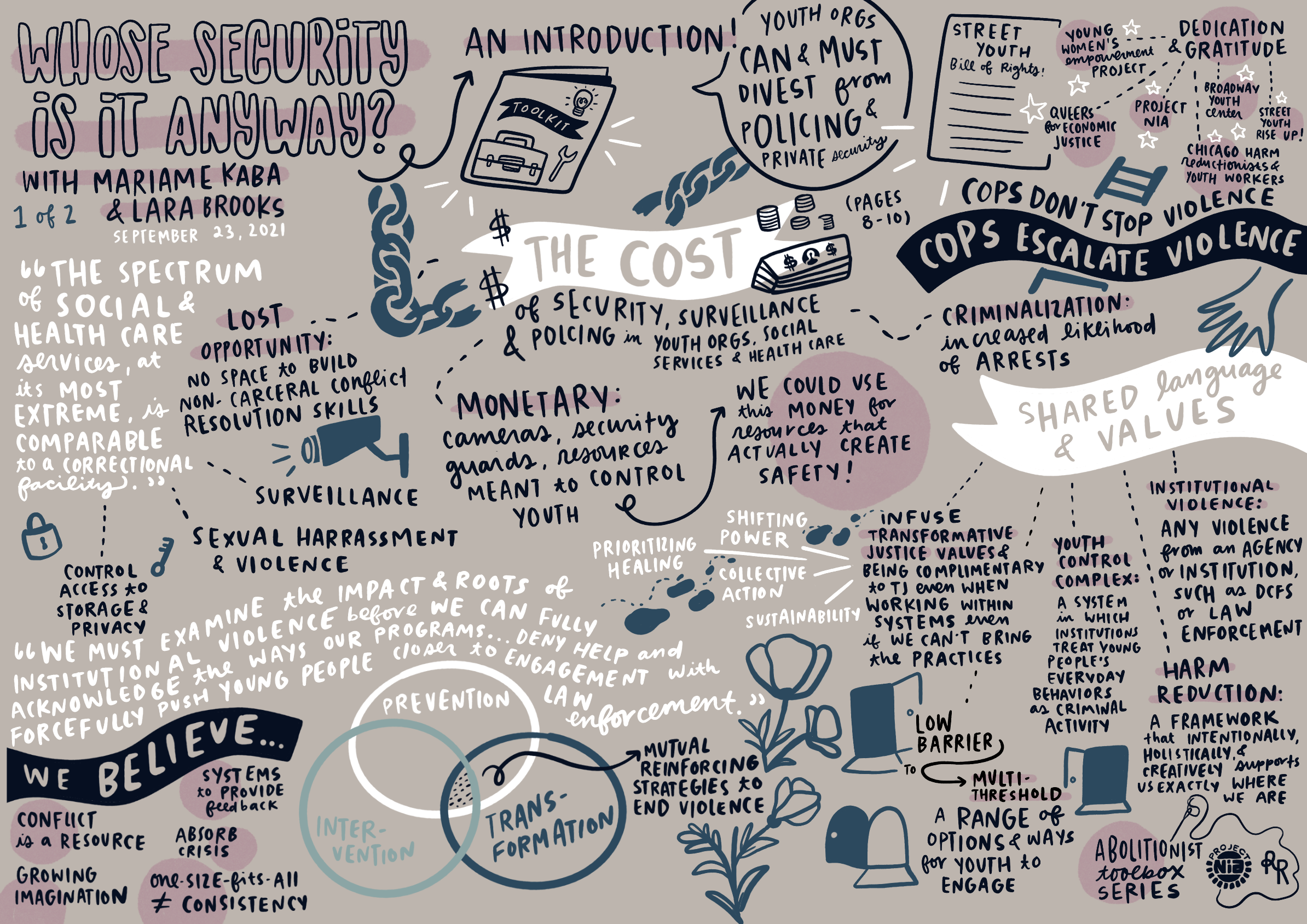
Workshop: Whose Security Is It Anyway?
This resource explores a neglected area of focus in the marginalization and criminalization of young people: the non-profit industrial complex. Heightened racialized surveillance and increasing state violence, particularly against BIPOC individuals, has also led to increased collusion and reliance on law enforcement within these spaces.

TJ Skill-Up Institute
This worksheet will take you through naming your conflict transformation skills, areas where you can keep building and deepening those skills, relationships that can support you in that work, and structures that can be resources where you are.

Navigating Public Safety Task Forces
This guide from the ground gathers lessons and victories from organizers who called for and engaged with public safety task forces over the past year — and the past decade. It is intended to support communities navigating common questions, taking into account the particular conditions of their own communities.

Workshop: Against Punishment Curriculum
How do we imagine a world without prisons and policing? Transforming our punishment mindsets is a daily discipline. Punishment is so deeply ingrained that we fail to even notice how we enact it in our lives. It takes practice to uproot it and to focus on being more restorative in our interactions.

What About The Rapists?
When prison industrial complex abolitionists tell people that they want to abolish police and prisons, they invariably ask, “what about the rapists?” Explore brief answers to this question, as well as questions that abolitionists can ask in return.

Cops Don’t Stop Violence
As police face one of the greatest crises of legitimacy in a generation in the wake of the 2020 uprisings, cops and policymakers are reaching for their longstanding tactic of fearmongering to push “law and order” agendas and pour more and more money into police departments. This report shares data, talking points, and narratives that highlight the fact that cops don’t stop violence, and offers context and information to help you combat narratives that are commonly used to defend police instead of defunding them.
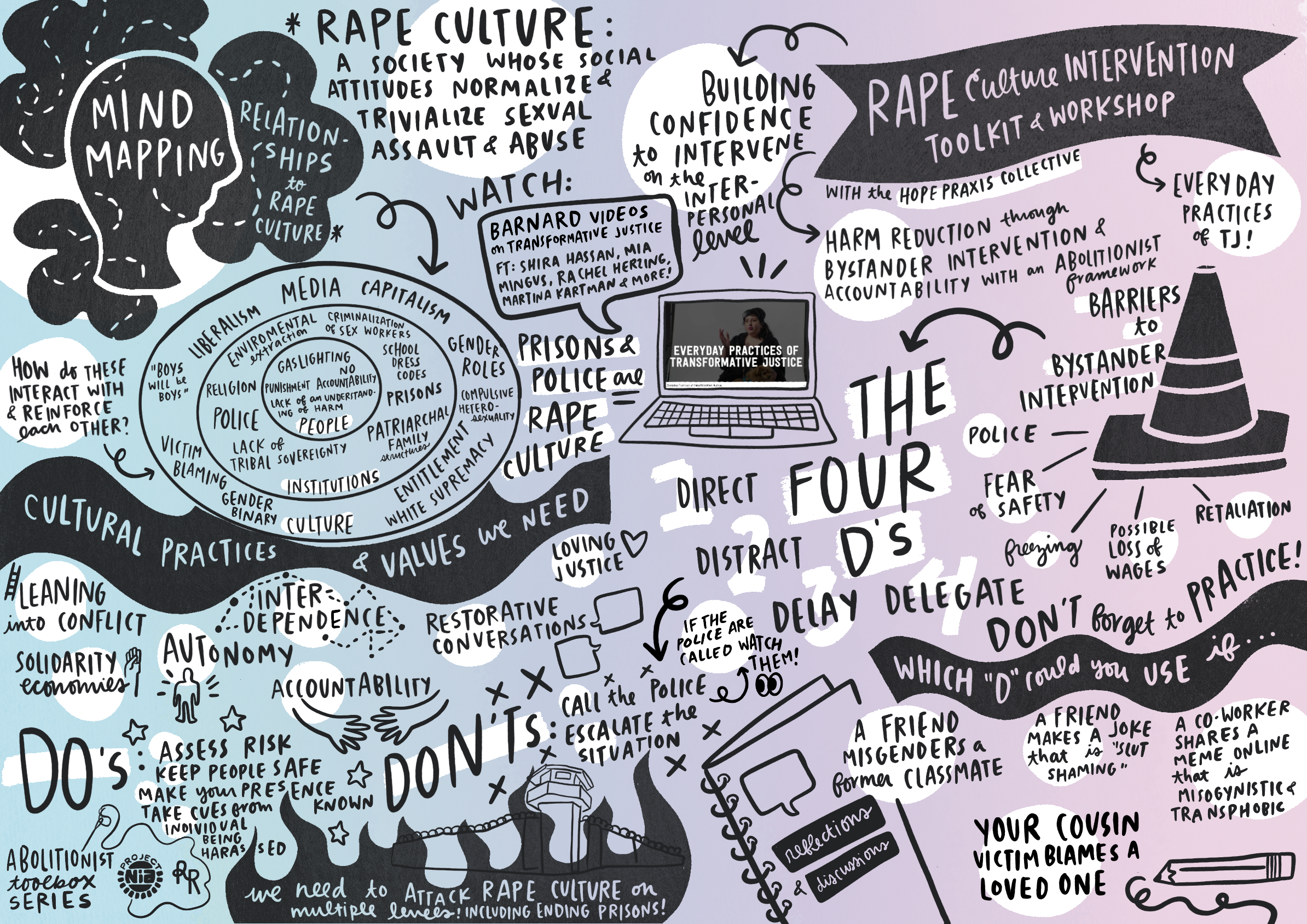
Workshop: The Rape Culture Intervention Curriculum
The Rape Culture Intervention Toolkit was inspired by Mia Mingus's quote "death by a thousand little cuts" — a reference to the way that we do a terrible job of responding to the kind of lower-level harm that often leads to an accumulation of unchecked trauma. The objectives of the curriculum are to provide people with an understanding of how rape culture maintains the status quo in the US (and abroad), identify what power we have to check and transform rape culture, and to provide people with skills on how to make amends for harm from an abolitionist perspective.