
Breaking the Silence
This is a curriculum for sexual assault service providers intended to accompany Interrupting Criminalization’s report Shrouded in Silence: Police Sexual Violence - What We Know and What We Can Do About It. Facilitators and participants are strongly encouraged to review the report before using any of the exercises in this curriculum.

Shrouded in Silence
This report, in conjunction with an accompanying curriculum for sexual assault service providers, is intended to contribute to breaking this silence, to summarize what we know about sexual violence by law enforcement officers, and to offer concrete steps toward prevention of police sexual violence and increased safety, support, and opportunities for healing for survivors.

Workshop: Get in Formation
“Get in Formation: A Community Safety Toolkit” is a collection of security and safety practices built by years of learning from Black, Indigenous, and People of Color movements within the U.S.

Workshop: Criminalizing Survival
Join Project Nia founder Mariame Kaba for a presentation on the "Criminalizing Survival Curricula" made in conjunction with Survived & Punished. Criminalizing Survival includes curriculum units and activities that can be used for political education focused on the intersections between racialized gender-based violence and criminalization.
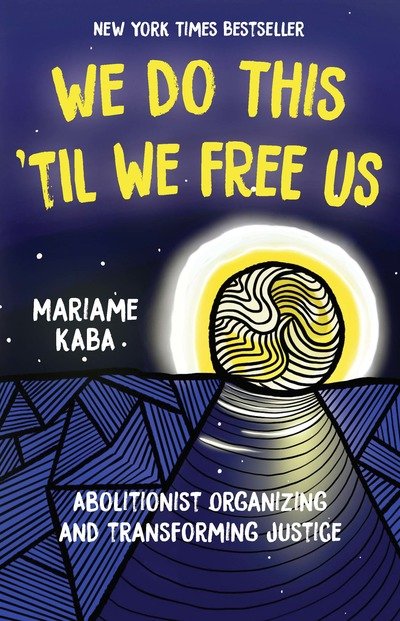
We Do This 'Til We Free Us: Abolitionist Organizing and Transforming Justice
What if social transformation and liberation isn’t about waiting for someone else to come along and save us? In this timely collection of essays and interviews, Mariame Kaba reflects on the deep work of abolition and transformative political struggle.

Workshop: Turning Towards Each Other
Jovida Ross and Weyam Ghadbian wrote the Turning Towards Each Other Conflict Workbook with the hopes of supporting people working towards social justice to build our collective conflict resilience and strengthen relationships, movements, and collective wellbeing.

The Demand Is Still #DefundPolice
This update to our June 2020 #DefundPolice toolkit reflects victories won across the country, key strategies deployed, some lessons learned - including tricks, tensions, and roadblocks along the way - and key questions communities are contending with in campaigns to defund police as we look forward to 2021.

Workshop: Two Sides of Justice Curriculum
In this session, we will explore the ‘Two Sides of Justice‘ curriculum by engaging in the activities and discussing how and where this curriculum could be implemented. We will discuss questions like: What is justice? How can we address violence in non-punitive ways? How do carceral systems impact people who cause harm and who have been harmed?

Police Responses to Domestic Violence: A Fact Sheet
Defunding police is a survivor-led anti-violence strategy that stops police from looting resources survivors need to prevent, avoid, escape and heal from violence - and puts more money into violence prevention and interruption.

Workshop: Creating Community in Classrooms
What are the building blocks for sharing space and how can we use them to address our needs as learners and educators? In this session, we will use the resource "How to Share Space: Creating Community in Classrooms and Beyond" as a springboard to explore the opportunities presented by these changing norms and the challenges they bring.

Unmasked: Impacts of Pandemic Policing
The COVID19 Policing Project was a collaborative effort to track and challenge policing and criminalization in the context of the coronavirus pandemic, including the violent policing of protest which further jeopardizes public health. This resource was created to offer tools and resources for individuals and communities to stay safe and to mobilize for what we need — instead of more cops, stops, tickets, cuffs, and cells.

Workshop: Restorative Justice Circles at Home
How can we use family Talking Circles to deepen our closest relationships with honest and open communication? What would it mean to intentionally create our own family values? We'll explore these questions and more using the new resource "Talking Circles At Home and Parenting Restoratively" by longtime Restorative Justice practitioner Jennifer Viets.

What’s Next
We hope that this guide will empower you to begin building a police-free future in your community and provide you with some strategies for ensuring this.

Workshop: Self-Accountability & Movement Building
Join us to explore the role self-accountability plays in building strong, sustainable movements. We'll discuss how self-accountability—that is accountability with and for ourselves—is essential in building accountable communities and the movements to sustain them.

6 Ds Until She’s Free
A resource intended to inform policymakers, organizations, advocates, and philanthropy entering the field as a result of growing awareness of rising and disproportionate rates of incarceration of women, girls, trans and gender nonconforming people. People incarcerated in women’s prisons now represent the fastest growing prison populations, increasing by 700% over four decades, outpacing the rate of growth of people in men’s prisons by 50%.

Trans Women of Color at Work
In this moment of uprising in response to the multiple crises unfolding across the country and world—particularly police violence against black people—it is imperative that we continue to demand what keeps our communities safe. Trans women and femmes of color (TWOC) have been historically excluded from the formal 1 workforce and forced to rely on criminalized work for survival. Such economic violence leads to police targeting and incarceration. Organizing over the past five years has begun to open up economic opportunities for trans women and femmes of color. We won’t go back. This is the time to fight to maintain and surpass those gains.

Problems with Community Control of Police
Over the past 50 years, radical Black organizations have consistently demanded community control of the police. The idea behind this demand is that those most impacted by oppressive policing should have the power to decide how the system operates in their own communities, and that community control of police would transform the force from an occupier into a partner (or bring truth to idea that the police “protect and serve”)

#DefundPolice Toolkit
Concrete Steps Toward Divestment from Policing & Investment in Community Safety
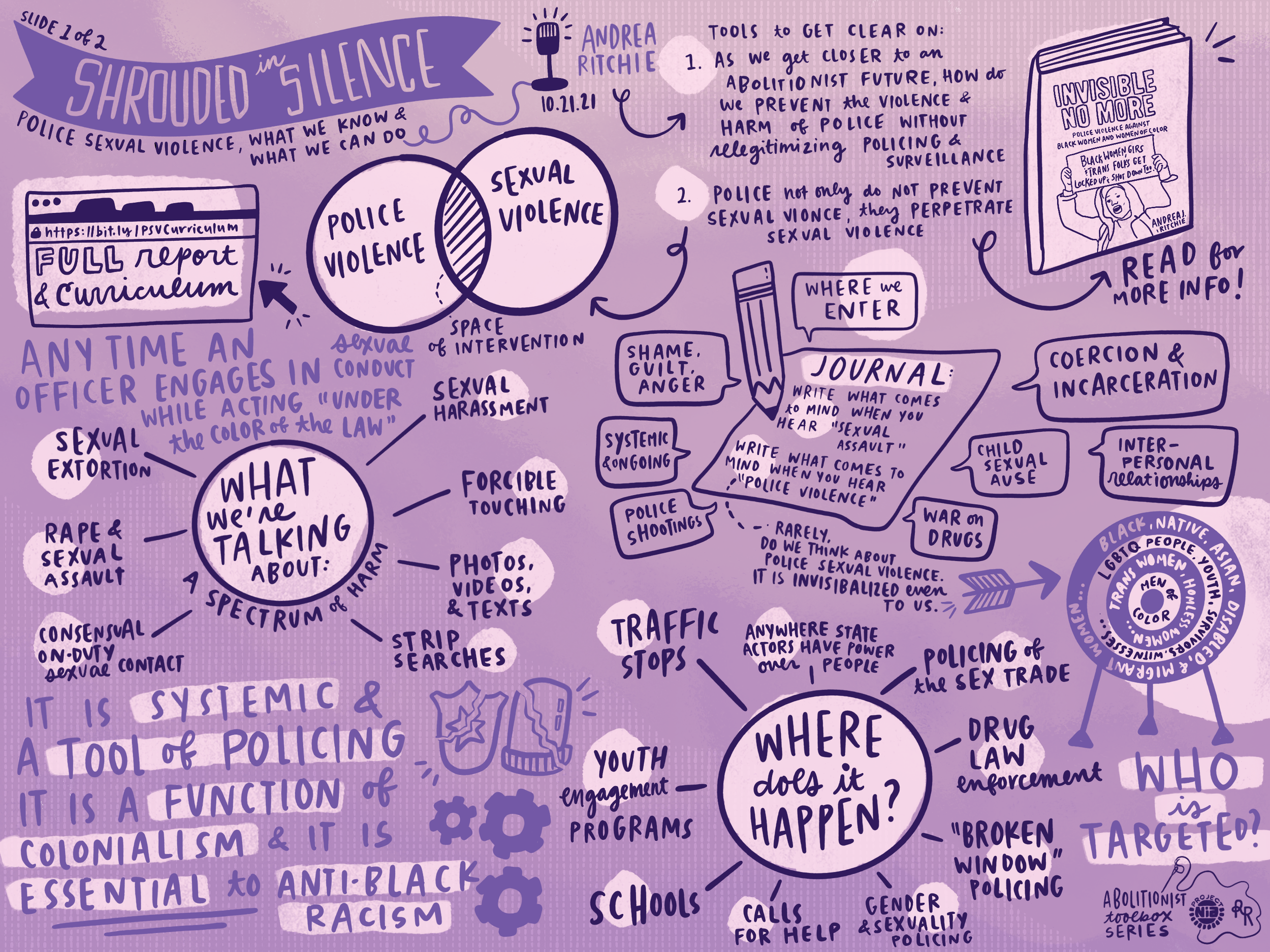
Workshop: Shrouded in Silence
In the midst of a national reckoning around the violence of policing, and a national conversation about sexual assault prompted by #MeToo and the ‘me, too.’ movement launched by Tarana Burke, sexual violence by law enforcement officers—including local and state police, ICE agents and Border Patrol, school “resource” officers, federal law enforcement agents, probation and parole officers—remains shrouded in silence. Survivors of police sexual violence are rarely heard from or discussed in either conversation, and their experiences generally do not drive organizing and advocacy in either context.

What is Driving Criminalization of Women & LGBTQ People?
Many people now know that women are the fastest growing prison and jail populations. Here’s a helpful factsheet on how we can Interrupt the Criminalization of Women, Trans and Gender Nonconforming People.