
Workshop: Self-Accountability & Movement Building
Join us to explore the role self-accountability plays in building strong, sustainable movements. We'll discuss how self-accountability—that is accountability with and for ourselves—is essential in building accountable communities and the movements to sustain them.

6 Ds Until She’s Free
A resource intended to inform policymakers, organizations, advocates, and philanthropy entering the field as a result of growing awareness of rising and disproportionate rates of incarceration of women, girls, trans and gender nonconforming people. People incarcerated in women’s prisons now represent the fastest growing prison populations, increasing by 700% over four decades, outpacing the rate of growth of people in men’s prisons by 50%.

Trans Women of Color at Work
In this moment of uprising in response to the multiple crises unfolding across the country and world—particularly police violence against black people—it is imperative that we continue to demand what keeps our communities safe. Trans women and femmes of color (TWOC) have been historically excluded from the formal 1 workforce and forced to rely on criminalized work for survival. Such economic violence leads to police targeting and incarceration. Organizing over the past five years has begun to open up economic opportunities for trans women and femmes of color. We won’t go back. This is the time to fight to maintain and surpass those gains.

Problems with Community Control of Police
Over the past 50 years, radical Black organizations have consistently demanded community control of the police. The idea behind this demand is that those most impacted by oppressive policing should have the power to decide how the system operates in their own communities, and that community control of police would transform the force from an occupier into a partner (or bring truth to idea that the police “protect and serve”)

#DefundPolice Toolkit
Concrete Steps Toward Divestment from Policing & Investment in Community Safety
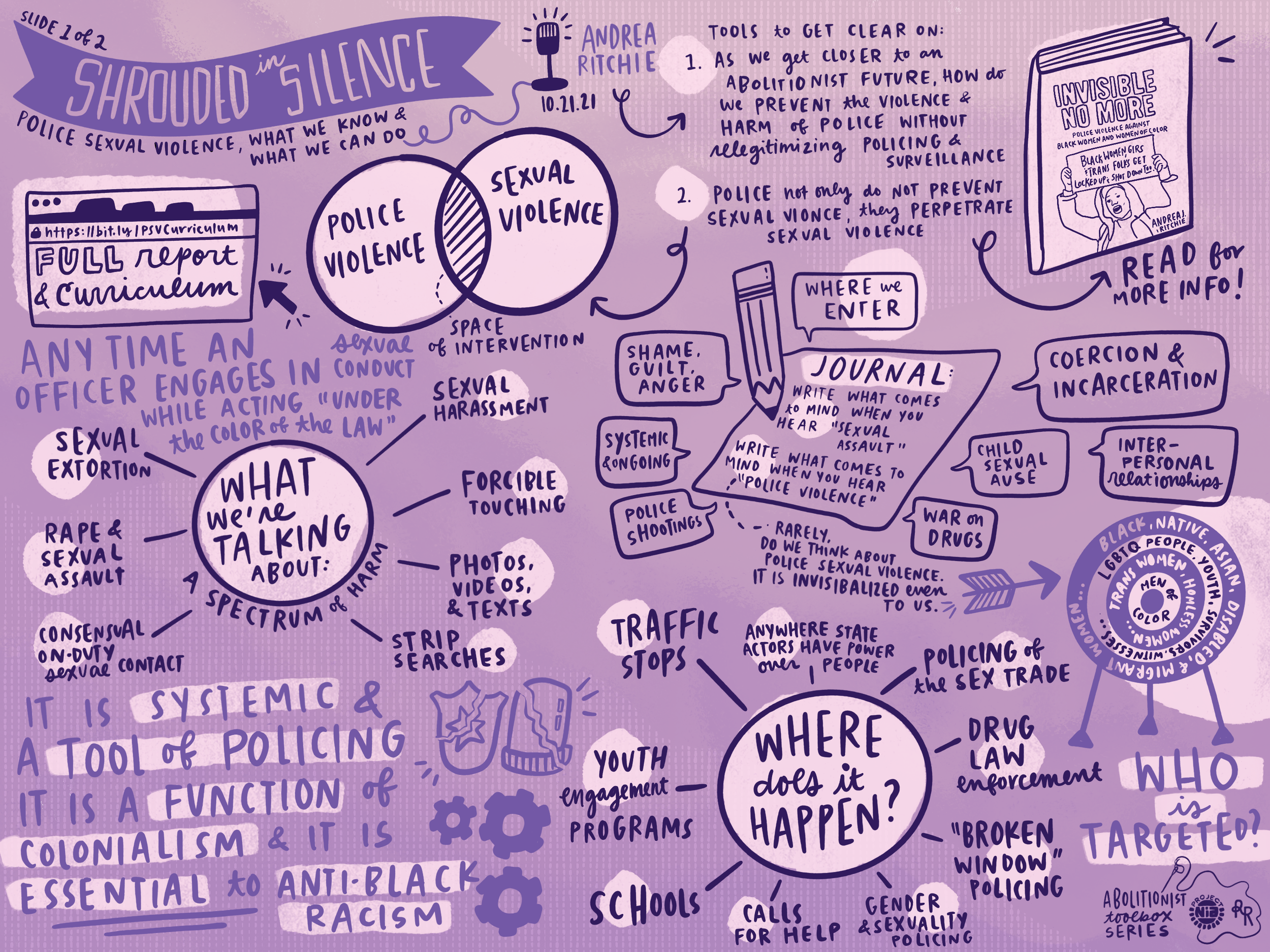
Workshop: Shrouded in Silence
In the midst of a national reckoning around the violence of policing, and a national conversation about sexual assault prompted by #MeToo and the ‘me, too.’ movement launched by Tarana Burke, sexual violence by law enforcement officers—including local and state police, ICE agents and Border Patrol, school “resource” officers, federal law enforcement agents, probation and parole officers—remains shrouded in silence. Survivors of police sexual violence are rarely heard from or discussed in either conversation, and their experiences generally do not drive organizing and advocacy in either context.

What is Driving Criminalization of Women & LGBTQ People?
Many people now know that women are the fastest growing prison and jail populations. Here’s a helpful factsheet on how we can Interrupt the Criminalization of Women, Trans and Gender Nonconforming People.


Resisting Criminalization of Reproductive Autonomy
In response to the expanding criminalization of reproductive autonomy through increasing restrictions on abortion and reproductive care, and the growing criminalization of pregnant people and parents, a group of reproductive justice and anti-criminalization organizers and advocates came together in May 2019 to develop a shared analysis and resistance strategies.


Radical Black Women of Harlem Walking Tour Guide
A guide that shares history and the extraordinary contributions of radical Black women in Harlem who built community, fought for freedom, and imagined other futures, including Williana Jones Burroughs, Regina Anderson Andrews, Ella Baker, Claudia Jones, Lorraine Hansberry, and more.

Expanding Our Frame
Despite the specific origins of “me too.” in conversations among Black women and girls, Black women and girls’ stories, narratives, and experiences remain largely at the margins of mainstream #MeToo conversations.

Research Across The Walls
A Guide to Participatory Research Projects & Partnerships to Free Criminalized Survivors (Survived & Punished)
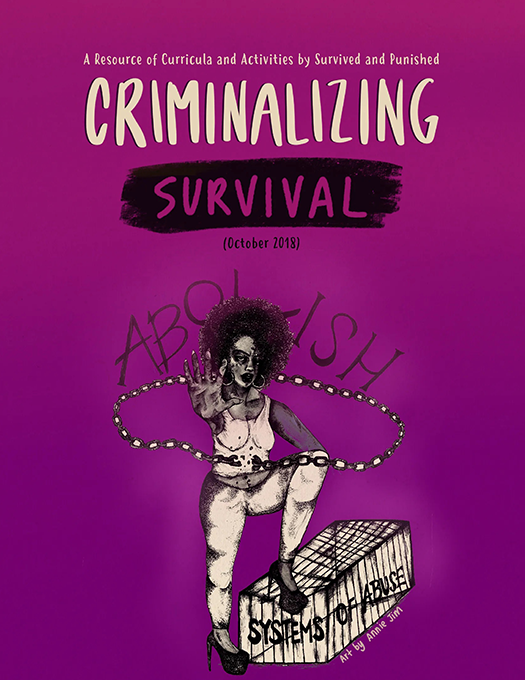
Criminalizing Survival
Criminalizing Survival includes curriculum units and activities that can be used for political education focused on the intersections between racialized gender-based violence and criminalization.
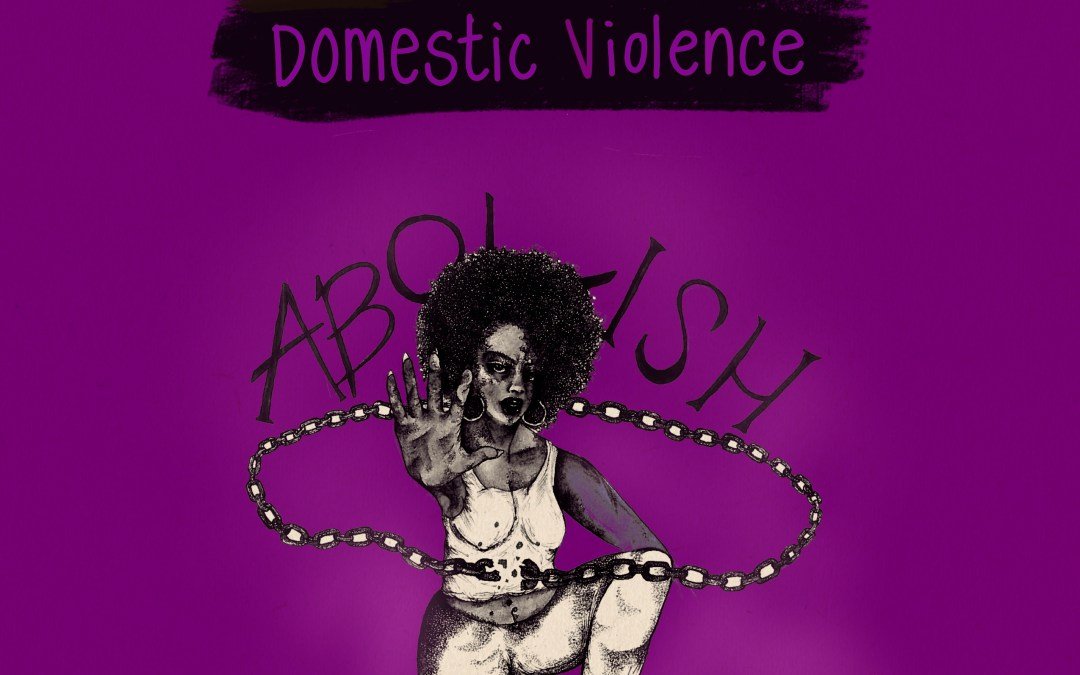
Criminalizing Domestic Violence: A Curriculum
This curriculum unit is intended to help activists, advocates, organizers and community members to learn more about the criminalization of domestic violence survivors.

The Crisis of Criminalization
This report is an urgent call for a comprehensive philanthropic response to the growing crisis of criminalization.
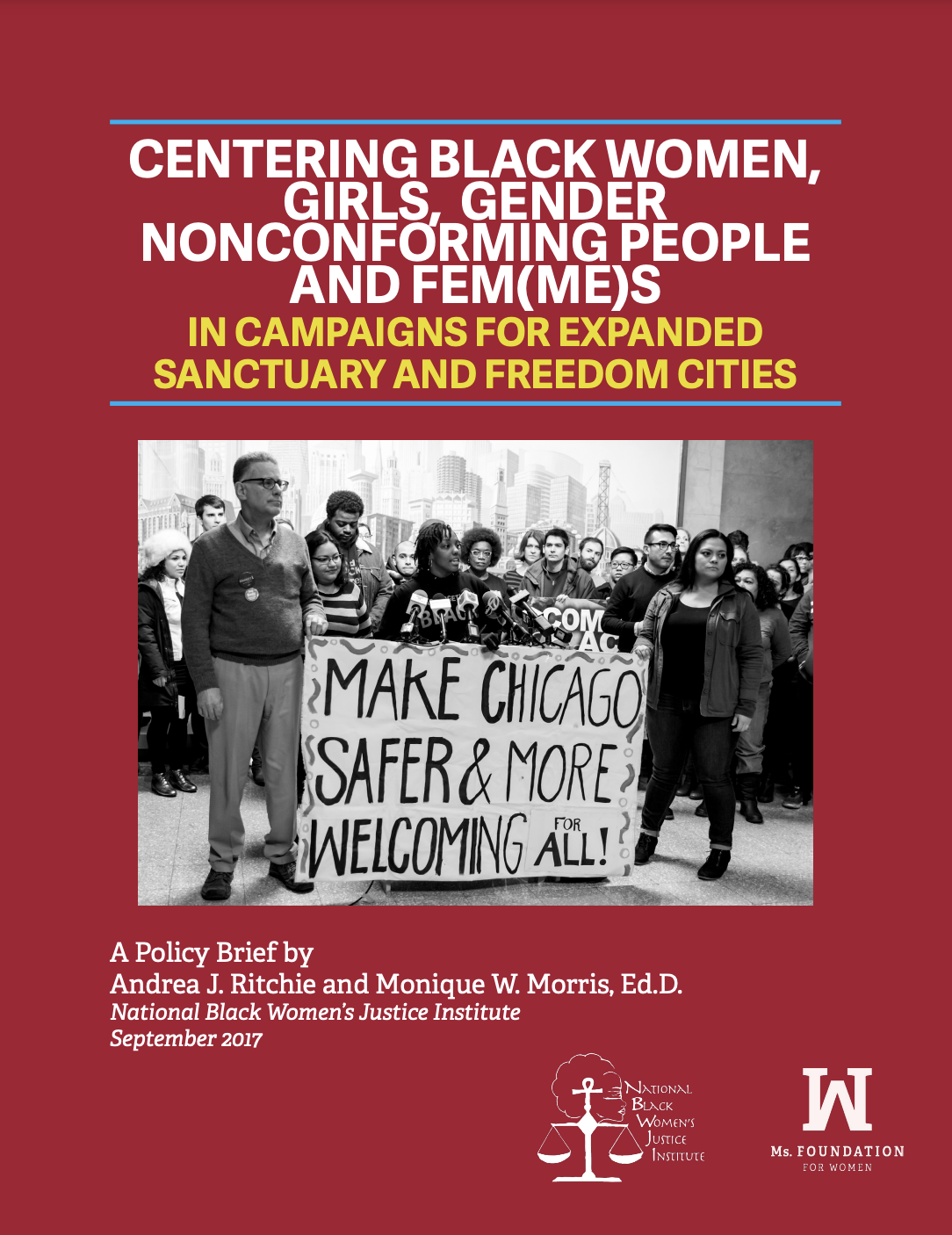

Invisible No More
Invisible No More is a timely examination of how Black women, Indigenous women, and women of color experience racial profiling, police brutality, and immigration enforcement.
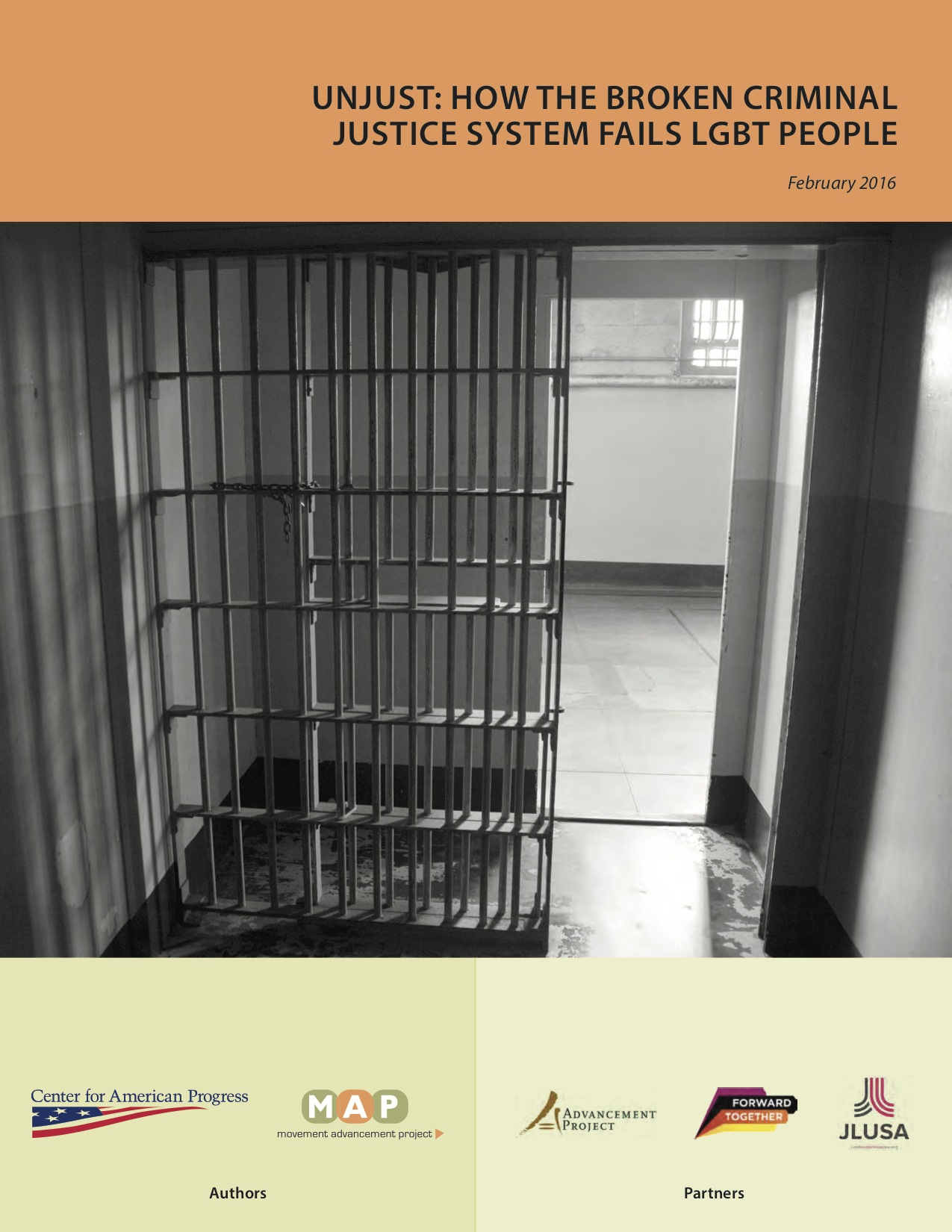
Unjust: How the Broken Criminal Justice System Fails LGBT People of Color
A report from the Movement Advancement Project (MAP) and Center for American Progress (CAP) that examines the pervasive discrimination against LGBTQ people throughout the criminal legal system, from entry to exit. It documents how pervasive stigma and discrimination, discriminatory enforcement of laws, and discriminatory policing strategies mean that LGBT people are disproportionately likely to interact with law enforcement and enter the criminal justice system. IC co-founder Andrea J. Ritchie wrote the foreword.