BDNH Storytelling Project: Reclaiming the Narrative: Decriminalizing Pregnancy Through Policy and Advocacy
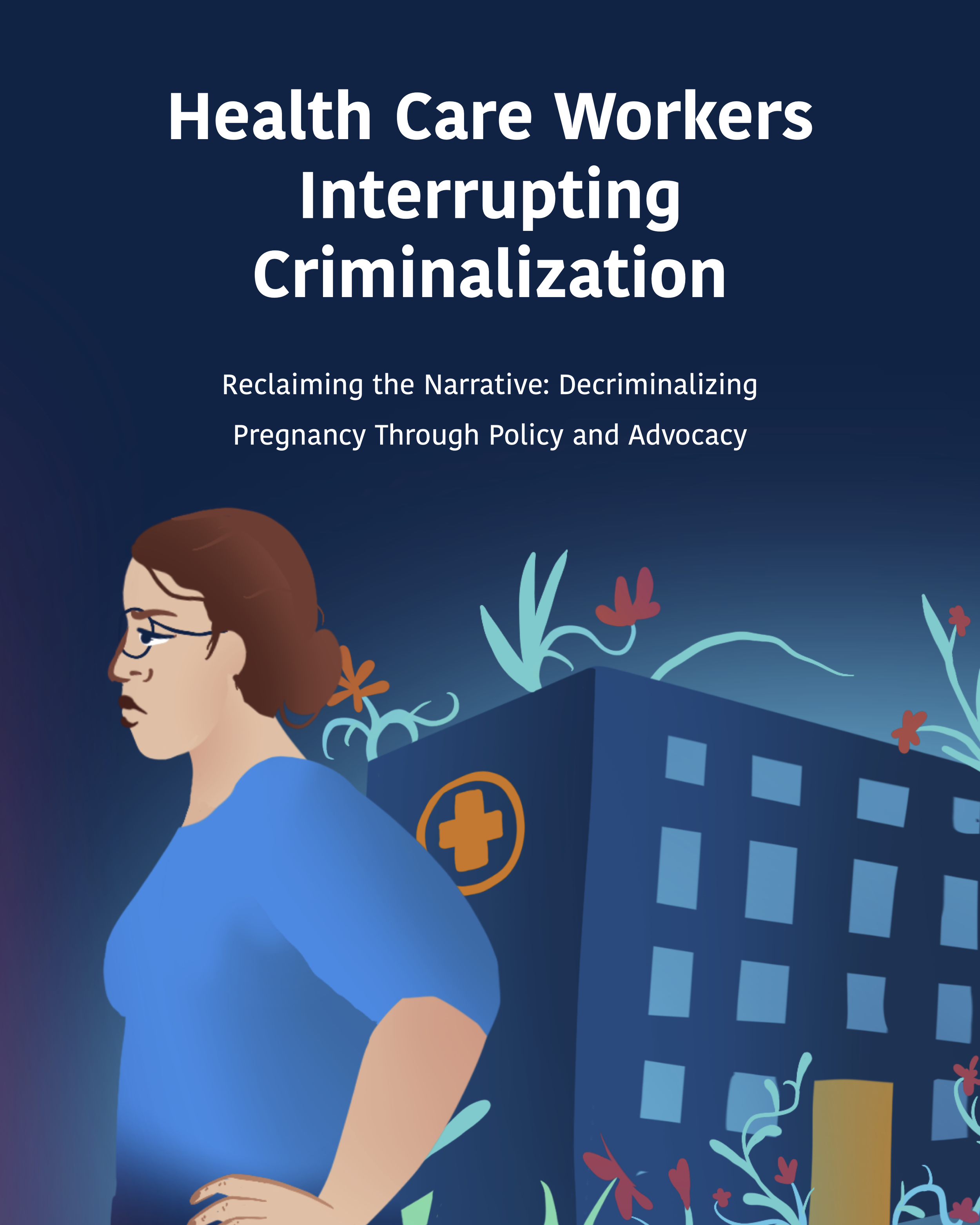
A Zine and Audio Story
Storyteller: Erika A. Christensen, Later Abortion Patient Advocate, Co-Founder Patient Forward
Zine Art and Design: Amir Khadar
In this story — offered in both zine and audio formats — a patient advocate who was central to passing the Reproductive Health Act (RHA) discusses the limits of legislative interventions in securing access to abortion care, and the importance of challenging criminalization at any stage of pregnancy.
This story is part of the Beyond Do No Harm Network’s Storytelling Media Project, which seeks to highlight and amplify the actions individual medical providers are already taking to interrupt criminalization in the context of care, in the hopes of increasing awareness of the harmful impacts of criminalization within the medical system and inspiring others to take action at multiple levels.
Check out the zine, audio, and audio transcript below!
-
Reclaiming the Narrative: Decriminalizing Pregnancy Through Policy and Advocacy
[00:00:00] By 2019, I had shared my story hundreds of times at rallies, protests, in legislative offices, and all over the media. That's how much we believed in the Reproductive Health Act. We really thought it would fix the law, so no one else would have to leave New York for third-trimester abortion care, like I did. Instead, it taught us a painful lesson: that even well-intentioned laws can pave the way for punishment.
[00:00:36] Let's rewind back to 2016. My husband, Garin, and I were living in Brooklyn, and I was very pregnant. I was high risk, so it was complicated, but we were excited. And then we got a fetal diagnosis that changed everything.
[00:00:54] At that point, termination was the safest option, but we were stunned to learn that New York State law banned abortion after 24 weeks. That might sound pretty reasonable given what's happening in other states, but it didn't feel reasonable when I needed urgent care at 30 weeks. My doctor, who was the first to suggest abortion as a necessary course of care, couldn't help me.
[00:01:20] And our insurance would have covered carrying to term and expensive interventions, but not the abortion I urgently needed. We felt grateful and guilty that my mom depleted her retirement savings to give us a lot of money quickly. We had to pay for the abortion, which was thousands of dollars, but also last-minute flights and hotels.
[00:01:45] On the flight to Colorado, I felt nervous. I was googling for information, and all I saw was anti-abortion rhetoric and images. But once we were inside the all-trimester clinic, I felt supported. For the first time during the long eight months of my fraught pregnancy, someone said: You are a person who deserves care.
[00:02:10] That truth changed me forever. At the clinic, there were counselors, nurses, and a gruff but capable physician. He told me I was making the best decision I could with the information I had. I asked him if I posed an ethical challenge for him since no one could be completely sure whether, or to what degree, my pregnancy was potentially viable.
[00:02:36] He told me nothing about pregnancy is guaranteed - that the viable life he could be sure of was mine. My tears that day were not just for the pregnancy I'd lost, or our hopes for the future. I also shed tears of gratitude, because I'd found a physician who, even during pregnancy, treated me like I was a human being worthy of care and autonomy.
[00:03:04] We came home angry, motivated, and determined to share what we had learned: That late-term abortion rhetoric is false. That these clinics provide essential healthcare, and that no government is better positioned to make decisions about our pregnancies than we are. I reached out to a writer at my favorite feminist blog, which led to an interview eventually read by over 2 million people.
[00:03:32] Like us, readers couldn't believe people were leaving New York for abortion care. One person who wasn't surprised was a lawyer at the New York Civil Liberties Union. She connected us with opportunities to advocate for proactive abortion legislation - the long-stalled Reproductive Health Act, or RHA. As directly impacted people, we could help get it passed.
[00:03:57] Immediately, the RHA felt like a lifeline - a way to channel our grief into a purpose. Our message was simple. New Yorkers were being denied care, and the RHA would fix it. But what did the RHA actually say in the bill language? It would basically bring New York state's abortion law in compliance with Roe v. Wade. Like Roe, it protected a fundamental right to abortion, to a point, but it limited those protections at so-called "viability."
[00:04:31] What is "fetal viability?" It's the idea of a point in pregnancy when physicians can predict whether a fetus may be able to survive on its own, should birth occur. This prediction is never certain, and is always an educated guess.
[00:04:49] There is no clinical definition of "viability," but back in 1973, the Supreme Court used this vague medical concept to draw a hard line in the law. The Roe decision legalized abortion up to this point, but states could still ban it after "fetal viability." Well, almost all of them did, and still do.
[00:05:13] Basically, the court used "viability" to justify government authority over pregnancy while allowing most abortions. It feels worth noting - this was not what the lawyers defending abortion in the case had argued for. They sought recognition of abortion as a fundamental right. They weren't asking for any kind of so-called balance between the rights of a pregnant person and the rights of the State over their pregnancy.
[00:05:40] Yet the court's compromise was celebrated as a full victory, and for five decades, the reproductive rights fields poured vast resources into defending it. Meanwhile, pregnancy criminalization steadily expanded, growing right alongside the prison-industrial complex. And because the Roe decision said the State did have a controlling interest later in pregnancy, people who are further along have been more likely to be surveilled and criminalized.
[00:06:11] Fast forward to 2019. Our campaign to pass the RHA was successful. Watching the vote from the Senate mezzanine alongside friends and fellow organizers, it felt... complicated. It was good that abortion was being removed from New York's criminal code, but we had learned a lot by then, not just about the political process, but about criminalization and how it works. And we understood the far-reaching harms of the "viability limit," which we had failed to effectively challenge.
[00:06:47] We had mistakenly pursued a remedy that contributed to the harm we were doing our best to address. That realization was a huge lesson and helped sharpen our analysis moving forward. This was about so much more than access to abortion care. In passing this law, we were also granting the government the power to police pregnancy - meaning, this limited victory for abortion came at a huge cost to all pregnant people and their bodily autonomy.
[00:07:19] What kind of dangers hide in "viability limits?" First is "fetal personhood" - the idea that a fetus has the same rights as a person. Laws that use "viability" effectively establish "fetal personhood." And if a fetus is a legal person at "viability," then the State can investigate and prosecute pregnant people to protect the fetus.
[00:07:45] This opens the door to charging people with serious crimes after miscarriages, still births, or other pregnancy complications. Second is the government's ultimate authority over pregnancy. "Viability limits" basically say there is a point when the State's power over a pregnant person's body can override their fundamental rights.
[00:08:11] This looks like forcing unwanted medical interventions, keeping dying patients alive against their will, and treating every pregnancy as a potential crime scene. And because "viability" is inherently vague, we are handing the government a lot of discretion to decide when their controlling interest begins.
[00:08:35] We have so many examples of how this has harmed real people:
[00:08:41] A Texas midwife was criminally charged for allegedly providing abortion care.
[00:08:47] A Pennsylvania teenager was investigated after self-managing an abortion.
[00:08:52] And a young woman in Georgia was arrested after her miscarriage.
[00:08:57] In fact, in the year after Roe was overturned, the organization Pregnancy Justice reported the most pregnancy criminalization cases in a single year since Roe was decided in 1973.
[00:09:11] And another organization, If/When/How, found that among cases of criminalization for self-managed abortion, 87% involved someone later in their pregnancy. In each of these instances, government interference became a normalized calculation about when in pregnancy the State could interfere, rather than examining whether the government should interfere at all.
[00:09:38] Like policing more broadly, these harms fall heaviest on Black women, young people, disabled people, those living in poverty, and others who are pushed to the margins by our failing systems. These same groups are also more likely to need abortion care later in their pregnancies due to systemic inequality.
[00:10:00] Bans lead to delays. Delays mean care is accessed later, when it's more expensive and harder to access. And as pregnancies progress, so does the risk of punishment. Stories like mine, white heteronormative parents facing late fetal diagnoses, are often used to make the case for limited abortion protections that abandon those facing the greatest barriers to care.
[00:10:30] Better pregnancy policies start with decriminalizing abortion throughout pregnancy. Because what good is a floor we can't all stand on? And yet, we have so much hope. We see evidence of real collective action all the time. More providers are expanding care, and new all-trimester clinics have opened, many led by younger, more diverse staff. And they're offering safe trauma-informed healthcare that keeps patients out of the legal system. Decriminalizing abortion also means protecting and de-stigmatizing these providers and their patients most at risk.
[00:11:11] And momentum is growing. More people are seeing the danger of handing our government control over pregnancy at any stage. We are joining together in solidarity to demand decriminalization and an end to pregnancy punishment. Because it's what we want for our loved ones, and for ourselves.
-
What is one way punishment can show up in pregnancy?
What did this story reinforce for you? What did it change?
Can you think of one legislative or policy change that appears helpful but might actually contribute to criminalization in the context of care?
-
Amir Khadar (they/them) is a Sierra Leonean-American multidisciplinary artist, designer, and educator originally from Minneapolis, MN. Their work as an illustrator and designer engages art as a powerful liberatory force, creating visual language for social change movements centered on decolonization, de-carceration, and environmentalism. Amir’s commitment to justice is evident through collaborations with organizations such as Thousand Currents, multiple ACLU chapters, Initiative Sankofa Afrique D’Ouest, and Forward Together. Their practice spans posters, reports, book design, art installations, exhibitions, and educational projects that imagine new ways of being for their communities. Amir also explores these themes through textile and digital art, integrating their storytelling into weavings, drawings, beadwork, and quilts. Learn more about Amir and their work here.